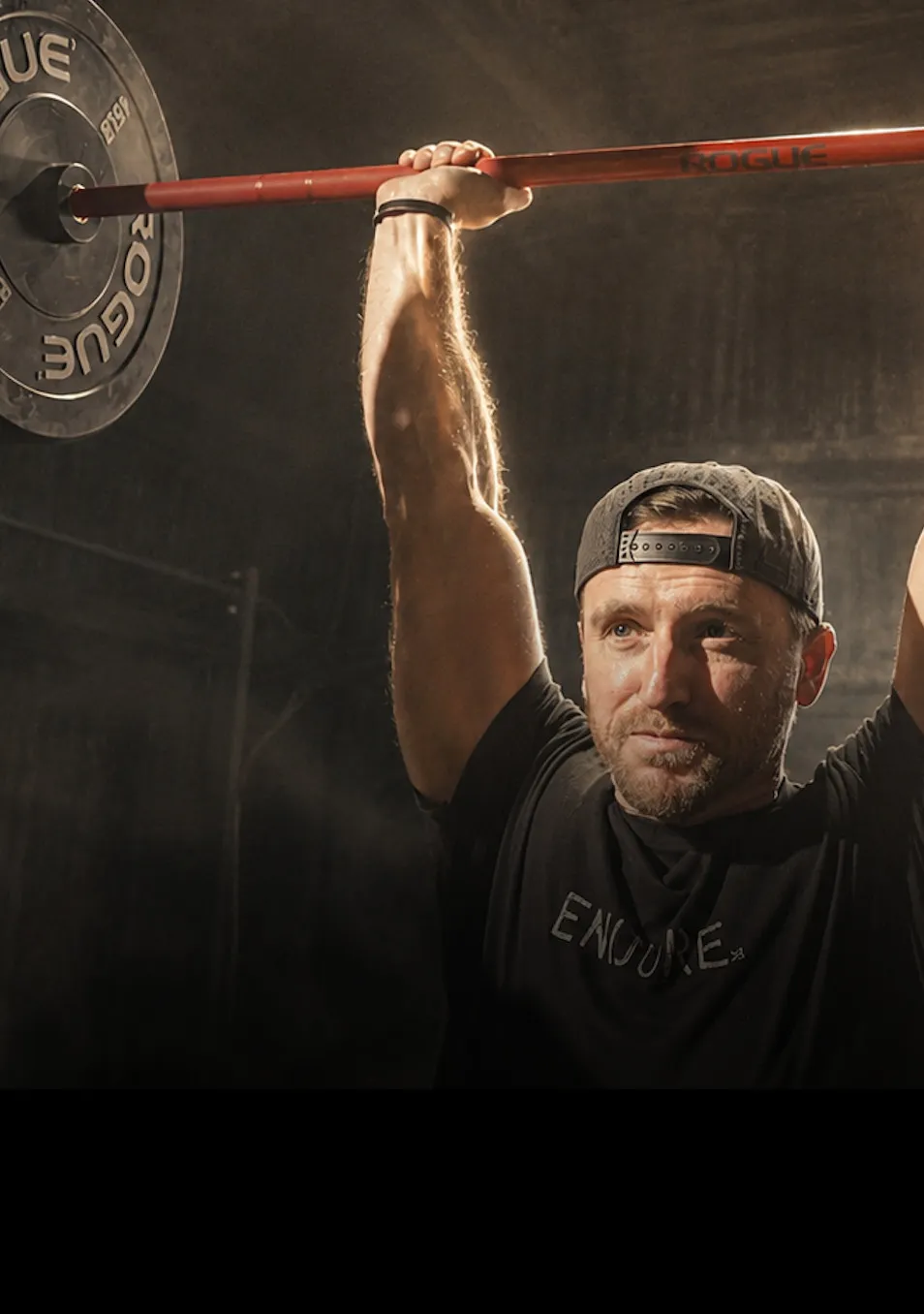
Program · 13 Weeks
Stronger lifts.Faster mile.
Thirteen weeks of max effort and dynamic effort barbell work with programmed conditioning. Four sessions a week, self-paced. You test your lifts in week 1, run a mile time trial in week 4, and re-test all of it in week 13.
- Goal
- Stronger lifts, faster mile
- Schedule
- 13 weeks · 4 sessions / week
- Session length
- 55 to 80 minutes
- Equipment
- A full garage gym: barbell, plates, a squat rack, and room to run
- Level
- Intermediate, already lifting a barbell
What you'll build
Strength and conditioning with a plan.
For the athlete who is tired of random workouts and stalled lifts: a bigger Back Squat, Deadlift and Strict Press, a faster mile, and better work capacity, all at the same time.
- 01
Max effort days
In most weeks two days are max effort: you work up to a heavy single or a rep max on a squat, a deadlift or a press. The lifts rotate so you do not stall.
- 02
Dynamic effort days
The other two days are dynamic effort: a lighter bar, fast reps, a new set every minute. Do not add weight because it feels light. Speed is the training.
- 03
Conditioning with a plan
The conditioning is programmed too: circuits for time, 30:30 row or run intervals where you log every effort, time trials, and work capacity pieces.
The training week
A real week on Accelerate
Four sessions a week: two max effort days and two dynamic effort days. This is week 1 from the app, the test week, not a marketing mock-up.
- Session 1Max effort: one rep max Back Squat and Deadlift
- Session 2Max effort: one rep max Strict Press, then conditioning
- Session 3Dynamic effort: squat and deadlift, a new set every minute, then a circuit
- Session 4Dynamic effort: Strict Press, a circuit, and 30:30 row or run intervals
- OptionalOne endurance session in weeks 4 and 8
- RestRest days go where you need them
All 13 weeks are in the app from day one. Do the four sessions in order and leave room for rest days. Weeks 4 and 8 each carry one optional endurance session, the EO3 5K and the H2K 5-Miler. Take them or skip them. Train at your own pace and move to the next week when you are ready.
How it runs
The lifts rotate so you do not stall.
Each new set of lifts opens with a test, and the loads fill in from that number. Week 13 brings back the lifts from week 1 and the mile from week 4.
- 01
Weeks 1 to 4: test, then build
Week 1 is a test week. You find your one rep max in the Back Squat, the Deadlift and the Strict Press, and the app saves them. Weeks 2 and 3 work up to heavy doubles and triples. Week 4 is the mile time trial.
- 02
Weeks 5 to 8: new lifts
Weeks 5 to 7 switch to the Box Squat, the Sumo Deadlift and the Close-Grip Bench Press, each tested in week 5. Week 8 goes back to the Back Squat and the Strict Press for max rep sets built on your week 1 numbers.
- 03
Weeks 9 to 12: jump, then rotate again
Week 9 is a jump week: a vertical jump test, broad jumps, box jumps and 40 yard sprints. Weeks 10 to 12 move to the Front Squat, the Deficit Deadlift and the barbell Floor Press, each tested in week 10.
- 04
Week 13: re-test
The three lifts from week 1 and the mile from week 4, so you can see what thirteen weeks did.
Who it’s for
Built for real athletes with real lives
The athlete who is tired of random workouts and stalled lifts. You should already squat, deadlift and press a barbell with good form, because week 1 asks for a true one rep max on all three. The conditioning uses pull-ups, ring dips, double-unders, power cleans and handstand push-ups. Scale them when you need to. If you are new to the barbell, start with INDOC.
- Tired of random workouts
- Stalled on the big lifts
- Intermediate barbell athletes
- Mile-time chasers
What you’ll need
- A barbell, plates and a squat rack
- A pull-up bar, rings, a box and a jump rope
- Kettlebells, a dumbbell and a PVC pipe
- Room to run; a rower is an option on most interval days
Added along the way: a resistance band from week 2, a rower or an Airdyne for the calorie rounds in week 5, a bench with safeties or a spotter in weeks 5 to 7 and week 11 (the note gives a Strict Press option if you have neither), a wall ball in week 7, and something to stand on for the Deficit Deadlift in weeks 10 to 12. See the full equipment guide.
Inside the app
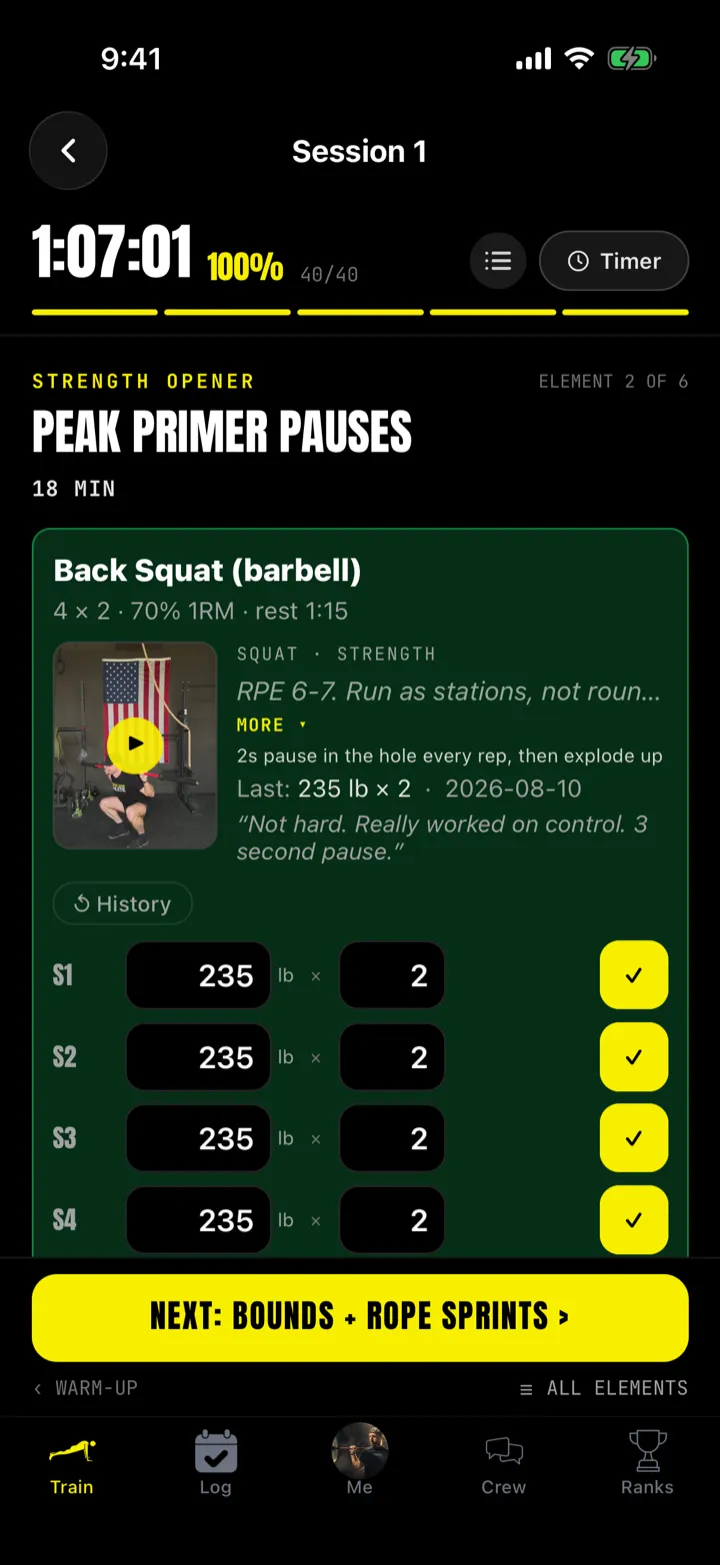
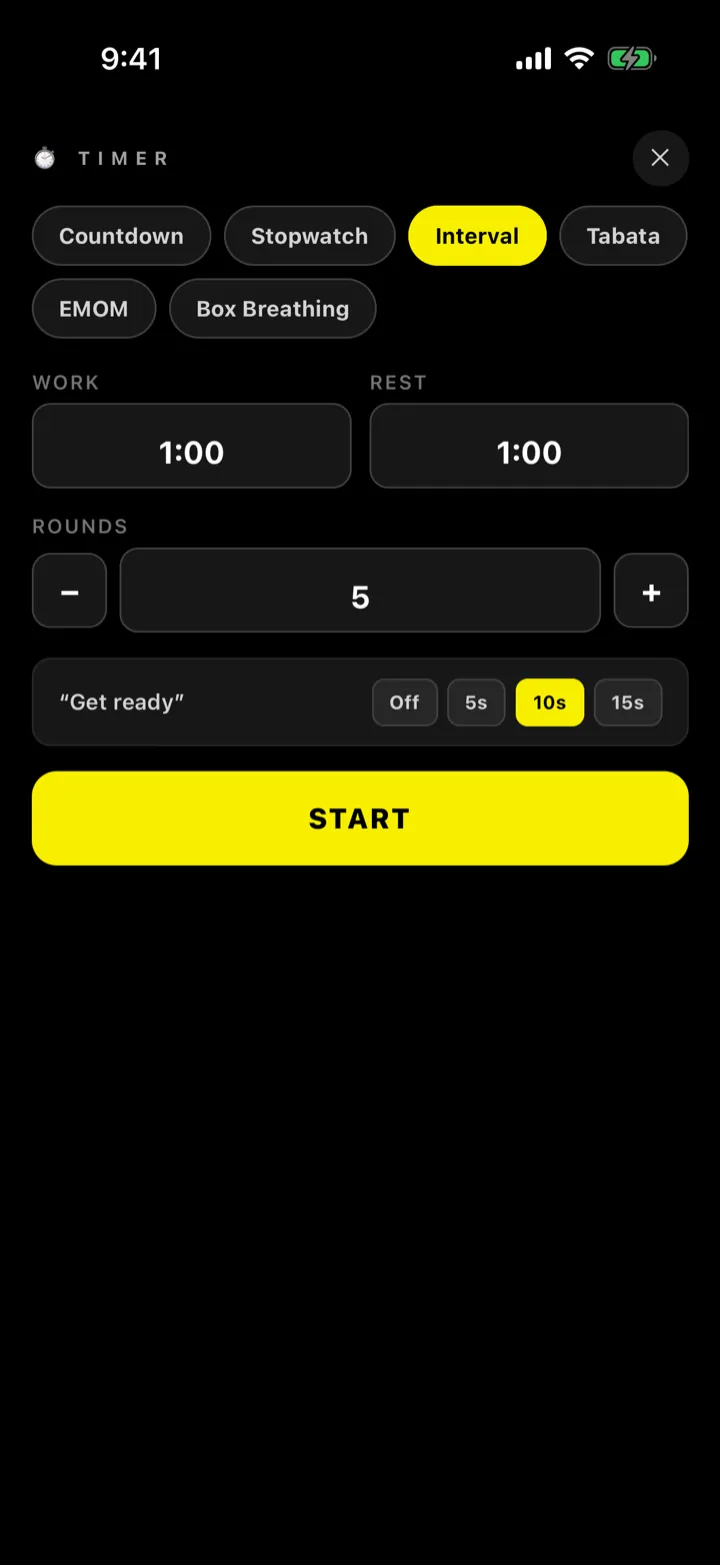
Every test, every set, every interval, logged
Accelerate is delivered in the Garage Gym Athlete app, with every block briefed and every number saved.
Your maxes, saved
You find your one rep max in the Back Squat, the Deadlift and the Strict Press in week 1, and the app saves them. From there the loads fill in for you.
A training max, on purpose
Accelerate runs on a training max, which is 90 percent of what you tested, so a set written as 70 percent is 63 percent of your true max. The bar is supposed to move fast.
Every effort gets a number
On the 30:30 row or run intervals you log every effort, not one total for the set. Circuits get a time and every test gets its own entry.
Log it all
Every interval, every circuit time and every test on iOS, Android, and the web, so you can see the change by week 13. Your history comes with you to whatever you run next.
FAQ
Questions, answered
- What are the goals of the program?
- A bigger Back Squat, Deadlift and Strict Press, a faster mile, and better work capacity, all at the same time. You test the lifts in week 1 and the mile in week 4, then re-test in week 13. When Jerred surveyed the first Accelerate team in 2015, the athletes who stuck to the program added an average of 30 lb to the Back Squat, 32 lb to the Deadlift and 16 lb to the Strict Press, and took 36 seconds off the mile.
- What equipment will I need?
- A full garage gym. From week 1: a barbell, plates and a squat rack, a pull-up bar, rings, a box, a jump rope, kettlebells, a dumbbell, a PVC pipe, and room to run. A rower is an option on most interval days. Added along the way: a resistance band from week 2, a rower or an Airdyne for the calorie rounds in week 5, a bench with safeties or a spotter in weeks 5 to 7 and week 11 (the note gives a Strict Press option if you have neither), a wall ball in week 7, and something to stand on for the Deficit Deadlift in weeks 10 to 12.
- What is the skill level required?
- Intermediate. You should already squat, deadlift and press a barbell with good form, because week 1 asks for a true one rep max on all three. The conditioning uses pull-ups, ring dips, double-unders, power cleans and handstand push-ups. Scale them when you need to. If you are new to the barbell, start with INDOC.
- How do I get the best results?
- Do the four sessions in order and leave room for rest days. Finish the week 1 tests, because every percentage after that is built on them. On dynamic effort days, do not add weight because it feels light. Speed is the training. Log every interval, every circuit time and every test so you can see the change by week 13.
One membership. All of it.
Every track. Every program. $25/month.
Run Accelerate start to finish, then land on an ongoing track so there is always a next session waiting. Your history, logs, and maxes come with you.
25,000+ better humans strong
Train like an athlete. Starting today.
Fathers, mothers, veterans, first responders, and busy professionals around the world train with us every day. Your first week is free. Cancel anytime.